
This is an in-depth book summary, notes and highlights of The 5 AM Club by Robin Sharma. Published in 2018 by HarperCollins, it is written as a fable and built around one idea: own the first hour of your day.
The 5 AM Club in three sentences
- The 5 AM Club argues that the first hour after you wake decides the quality of the rest of your day.
- Robin Sharma's method is to rise at 5am and run a Victory Hour split into 20 minutes of exercise, 20 minutes of reflection and 20 minutes of learning.
- He claims that repeating this for 66 days builds the inner capacity that outer results follow from.
Key takeaways
- The 20/20/20 Formula splits the first hour into 20 minutes move, 20 minutes reflect, 20 minutes grow.
- The Victory Hour is the 5am to 6am block you protect before anyone else is awake.
- The Four Interior Empires are Mindset, Heartset, Healthset and Soulset.
- Habit installation takes about 66 days, across Destruction, Installation and Integration phases.
- The Twin Cycle of Elite Performance alternates a High Excellence Cycle with a Deep Refueling Cycle.
- The 90/90/1 Rule gives the first 90 minutes of your workday to one project for 90 days.
- The 60/10 Method is 60 minutes of focused work followed by a real 10 minute break.
- The 10 Tactics of Lifelong Genius cover focus, sleep, exercise, learning and weekly planning.
Who should read The 5 AM Club
- Founders and freelancers who control their own schedule and can move their morning.
- People whose phone takes the first hour of the day before they choose to give it.
- Readers who absorb ideas better as a story than as a manual.
- Anyone who already wakes early but has no structure for the extra time.
- Fans of The Monk Who Sold His Ferrari who want more of the same style.
- People who want one prescriptive routine to try instead of a menu of options.
Who might not enjoy it
- Readers who want direct instruction. It is a 336 page fable, and reviewers commonly say the core advice would fit in 30 pages.
- Shift workers, night owls and parents of young children. A fixed 5am start is not workable for everyone, and the book does not really address that.
Popular quotes from The 5 AM Club
Own your morning. Elevate your life.
The book's central claim, and its subtitle, that the start of the day sets the rest of it.
All change is hard at first, messy in the middle and gorgeous at the end.
Expect a new routine to feel bad before it feels normal.
An addiction to distraction is the death of your creative production.
Interruption, not lack of talent, is what stops good work.
The smallest of implementations is always worth more than the grandest of intentions.
Doing one small thing beats planning a big one.
You need to remember that your excuses are seducers, your fears are liars and your doubts are thieves.
Sharma's framing of the internal resistance that keeps people in bed.
Elite producers and everyday heroes understand that what you do each day matters far more than what you do once in a while.
Consistency beats occasional bursts of intensity.
Victims have big TVs. Leaders own large libraries.
A blunt line on choosing learning over passive entertainment.
Everyone dreams of being a legend until it comes time to do the work that legends do.
Wanting the outcome is common. Doing the work is not.
How The 5 AM Club compares to similar books
The Miracle Morning by Hal Elrod
Six morning practices, called the Life S.A.V.E.R.S., done before the day starts. Elrod lets you pick your own wake time and split the minutes as you like. Sharma fixes both.
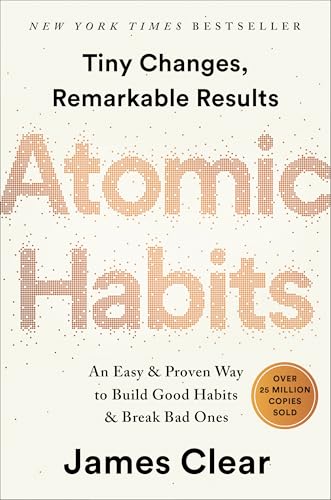
Atomic Habits by James Clear
Small habit changes compound through cue, craving, response and reward. Clear explains how habits work and leaves the routine to you. Sharma hands you one routine and little theory.
Deep Work by Cal Newport
Undistracted concentration is a rare skill and the source of valuable output. Newport argues from research and case studies, covers the whole workday, and uses no fable.
The Monk Who Sold His Ferrari by Robin Sharma
A burned out lawyer learns life lessons from sages in the Himalayas. Same author and same fable device, but about purpose and calm rather than a morning routine.
Daily Rituals by Mason Currey
Short profiles of how 161 writers, artists and thinkers actually structured their days. Currey reports real routines and shows there is no single winning schedule. Sharma prescribes one.
The 7 Habits of Highly Effective People by Stephen R. Covey
Character and priority principles, including Sharpen the Saw for daily renewal. Covey is a whole life framework and treats renewal as one habit of seven, not the centrepiece.
About Robin Sharma
Robin Sharma, born 1965, is a Canadian writer and speaker. He studied at Dalhousie University and took a master's degree in law there, then worked as a litigation lawyer, including for Canada's Department of Justice, until his mid twenties.
He self-published MegaLiving in 1994 and The Monk Who Sold His Ferrari in 1997, and moved to writing and speaking full time after the second book sold. He founded Sharma Leadership International and has written more than a dozen books.